
I am a disgusting snob
and my hatred of vulgar, common things will engulf the world!

Read this quote.
Moral and aesthetic horror at the ignobility of the popular scene gave way to an opposite attitude in the symbolists, and Mallarmé is, before Joyce, the best spokesman of the new approach...
A shop window full of new books prompts his reflection that the function of the ordinary run of books is merely to express the average degree of human boredom and incompetence, to reduce to a written form the horizon of the human scene in all its abounding banality. Instead of deploring this fact as literary men tend to do, the artist should exploit it: “The vague, the commonplace, the smudged and defaced, not banishment of these, occupation rather! Apply them as to a patrimony.”—Marshall McLuhan writing about Stephane Mallarmé’s 1896 essay Cris de Vers in Joyce, Mallarmé and the Press, 1954
Short sentences; basic vocabulary, clichés and formulas, undeserved, gushing blurbs.
There are plenty of things to deplore about modern books. And I have deplored them, loudly and angrily. I spent all my peak developmental years discovering and refining my own niche taste, so as to become more and more niche. One of a kind! Undiluted and pure of pedestrian taste. When other people were socializing, I was savoring the best of the best, wherever I could find it amid the limitless libraries of physical and digital world.
I’m a book snob, a blog snob, a music snob, a movie snob, a computer snob, a thrift store hipster, and a budding culinary connoisseur to boot.
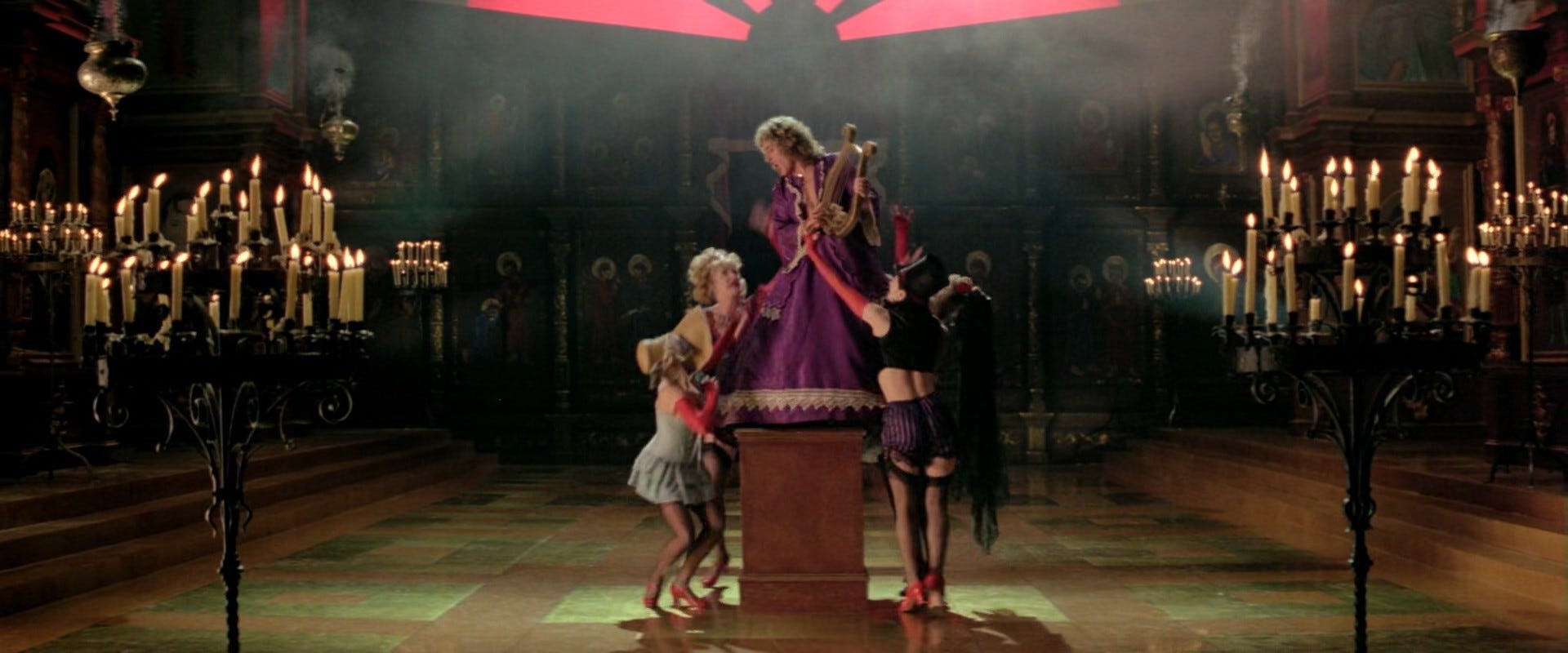
I’m not an admirable snob, though. I’m no respected critic, leading enlightened masses to culture. Nobody aspires to be me. I am a shameful, duplicitous snob. I didn’t socialize enough to learn to be constructive. All I can do is hate on things, because most of what other people like, I hate.
I’ll just avoid what I hate, and I’ll avoid you when you talk about it. This is how I act nice: I don’t want to tear what you like apart, because I might tear you apart along with it. Fragile people like me know how to be gentle to other fragile people. If it ever comes close to that, I’ll just lie and pretend to like it or note some good aspect of it, approvingly, hoping you’ll mistakenly generalize my particular praise into praise of the whole.
On a healthier note, I do often share something I like when I think you’ll love it. Notice “like” vs. “love” there. You have to love discovering it more than I pretend to just like it. And there’s another catch: I am always still trying to lead you into accepting that I have better taste then you. That’s my identity, after all.
And since I’m too cowardly to actually criticize things I think are bad, and thereby insult people who like those things, you can’t ever get to learn my real taste. I try, instead, to develop some kind of mystique of inscrutability. As long as I intentionally give an unreliable account, with red herrings and wide omissions, you’ll never get to the bottom of my depths!
I confess to all this snobbery because, I think, I am well on my way to growing out of it. Amazingly, as I might have feared before, becoming less of a snob has not meant a collapse into mediocrity! Rather, I’m happily realizing that popular things which speak to lots of people must, in their intrinsic form, be very human. And I humanize myself when I accept them into my life, and make them a new ground to grow in. I have learned to understand that, to be human, I have to start with what most people share in common.
It does mean getting over myself, however.
And there is never only one humbling event when you’re as big of a snob as I am.
Dress-down Day
My first dressing down was in 2016-2017, when I took a one-year introductory college program about the music industry and audio engineering. My musical tastes up to that point had been mostly classic prog-rock and glam; the sort of complex, high-fidelity music that punk rock was a direct rebellion against. Music where, from the home listener’s perspective, the audio engineer is the most important band member. I didn’t listen to individual songs, very often—I had hours to fill, and songs are far too short. My main unit of music was albums; especially concept albums. When I put on my headphones, it was with the intention to revel. To repose into the grand sonic dream-scapes of rock virtuosos. But it’s not as easy as skimming the most highly-rated works; I’d also invest thousands of hours exploring the depths of deep-cuts and b-sides, looking for missed gold.
Then I decided to go back to school as an adult. But in that half-assed way where you pick something you’re interested in instead of something profitable.
And so, suddenly, I had to listen to a lot of contemporary pop and rap music. Like, daily. And not only that, but I had to dissect and analyze and then create it! And work and listen with lots of people who loved it, over and over.
How horrible! Impotently forcing myself to try to bop along to, tap my foot to, get inside the banal background music of top-10 radio hits. Imagine trying to find real music in basic bitch simple chord progressions and the sentimental lyrics of overly emotional mopers, the free-styling rap verses of horny, broke, and sober tough guys trying desperately to manifest what will sate them. Guzzling the dreck of digital percussion, gratuitous stabs and moans with all instrumentation buried or processed into oblivion! Mapping nested formulas onto the graph paper in my head over and over again. Formulas which have been done to death, yet still live, like zombies, killing the quiet spaces for people who can’t stand being alone with their thoughts, or need someone to feel for them. Ugh!
After a few months, however, my facade began to crack. Well, that’s not quite right. Usually a facade in front of something else, obscuring it. I am using the metaphor more retro-causally, however. At first, my snobbery was me. But what was happening was that I was growing something behind my snobbery, and it became a facade.
My weak point was this: I am not a musician. My elitism was in regards to the selection of music I listened to, given the infinite repertory of decades of recorded music. I was proud of my cultivated taste as a lay listener. When it came to making music, guess where I had to start? Yeah. With the basics. With all those formulas. And a crappy mix. And a electronic drums. And various synth stabs as sugar and fill.
Suddenly the complexity of the music I did like, or had liked up until then, became far beyond me to understand. I couldn’t understand how it was made at all. The bands I adored had nothing to teach me about how to mix or write. To lmake music, as a beginner, I had to learn from songs which exemplified the best of what I was capable of. I started discovering what it was that made pop music enjoyable to listen to for me.
And I did. And suddenly I lived in a completely different ear-world that I had before.
Acoustic Space, Literally
Most prominently, I started noticing the acoustical qualities of various venues; it wasn’t that a live band was good or bad, but how they were set up and where they were playing.
Good musicians know how loud to set their kit to be mic’d by the audio person; they do most of the work. When an amateur punk or metal band cranks everything “up to eleven” in a small venue, then starts complaining that nobody can hear the lead singer, that’s on them. “Turn up the mic!” they yell to the sound person, who literally couldn’t do anything practical except walk up and turn down the gain on their guitar cabinets, or tell the drummer to go lighter on the snare.
When I was a headphone-wearing collector of concept albums, I had no idea how sound worked. Music came to me finished, in a can on each of my ears. Bands and songs were a matter of personal identity symbols, aesthetics and ineffable sensation. What I listened to was who I was! Now that music was becoming a system—becoming a complex of discretely knowable parts and concepts which I could assemble and disassemble in my mind—everything about it changed.
I won’t say that I can listen to anything now, but I’ll happily enjoy far, far more music than I used to. Anything a DJ finds fit to play on a radio stream for a genre I like is fine. And free internet radio streams are 90% of my listening nowadays. How the mighty has fallen! Or... have I?
My standards haven’t fallen. They’ve greatly broadened and sharpened. They’re more informed by knowledge of the art, and the process.
And there are things about pop music, and standard song forms and tempos and chord progressions, which match closer to the human body. The cerebral, contemplative mood one gets while enjoying a progressive rock concerto comes from another world; the way a pop song takes over your body is primal; made for moving and dancing. Club music is great for working out. Most people have bodies—even me, it turns out—and so music has normalized to the cadences of our physical forms.
Off the High Horse
I won’t go into as much detail for the rest of my various humblings. Once I learned to cook, my palette totally changed. And now, as I follow all the well-intended advice I read about “writing for yourself”, I am coming to the points where I need to change how I write if I want to make it more than a hobby, or outlet, or scream into the void.
My highest rated piece here on Substack is called Focus is Bullshit. I am reminded of it because my phone just chimed telling me it had been restacked, again.
It’s short and it’s polemical (which means angry and opinionated). It’s the opposite of how I usually write.
To be honest, it’s the sort of piece I, a snob, look down upon. It’s an attention-seeking rant—the sort which feels like selling out. Easy and beneath me, made by chopping and dissecting myself into nibble-sized commodities for the titillation of lazy grazers.
On the same note, half of the articles the Substack feed sends me are short self-help tracts. I’ve read a few for motivation and now the flood-gates have opened. I must admit, to the chagrin of my inner writing-snob, that they are slowly chipping away at me. Even as I roll my eyes, I must admit in rushed words through clenched teeth that I am becoming a better man as they sink in.
Over the years I’ve read a few top-seller books on habit change, on getting a routine, or on being successful. This year I’ve read about eight or nine. I do this mainly in order to help the clients I’m seeing in my community work. Because last year I went to college again and took a year long course again. Only, since I’m in my thirties and not my twenties, I took something not that I found interesting, like last time, but that I thought was employable. So now I volunteer twice a week, learning to apply what I learned about addictions counseling and case management.
I have an office where I host sessions with people who need to make changes in their lives. I’ve only been doing it four months. In this short time, I’m coming to the realization that everything I learned in school, and everything in all the self-help books I’ve read are all screaming the same thing, over and over. The formulas have been solved.
What do you say to someone who needs to fix their broken, self-destructive life? “Change your environment, set better goals, track your habits, make a routine, break things down into easier steps, join better social groups, leave toxic friendships, be more accountable, learn to listen, etc.”
How many ways can you say it?
Music to my Years
Turns out, just like pop music, you can say it as many ways as you’d like and it never gets old. The right number of ways to arrange the tried-and-true tricks for fixing your life, in fact, is equivalent to the number of people living on this planet. Because that’s how many lives out there could stand some improvement according to what we know works.
I realized this as I started noticing that each self-help book is notable in its own special way. One client, who calls me regularly from prison, turned me onto David Goggin’s book Can’t Hurt Me. It’s a wild book. Goggin’s came from a disastrous life of abuse, terror, crime, and prejudice and remade himself into a top student, Navy SEAL, and record breaking marathon runner. The story of how he took on personal responsibility is extreme. It resonates with people like my incarcerated client, who needs a radical intervention after a serious wake-up call, and must fight in an unfair world.
What really roused my interest, however, was re-reading this McLuhan piece with my weekly online reading group on Thursday. The French Symbolist poet Stephane Mallarmé was a genius. His observations about late 19th century France laid the bedrock for understanding the modern world—at least for us scattered folks who have luckily fallen into Marshall McLuhan’s erudite art history. In Joyce, Mallarmé, and the Press (quoted above), McLuhan demonstrates how Mallarmé saw the origins of mediated collectivism—epitomized by the internet—in the circulation of daily newspapers. Before Reddit became “the front page of the internet”, the telegraph allowed actual front-pages to update readers on the news of the world every day, over a century and a half ago. As a slightly madder me explained, holding back tears in an early YouTube video, we’ve been in fairyland for a very long time.
What was in the press, Mallarmé wrote, was often “vulgar”, and would leave “some people cold because they imagine that while there may be a little more or less of the sublime in these pleasures tasted by the people, the situation as regards that which alone is precious and immeasurably lofty, and which is known by the name of Poetry, that this situation remains unchanged.” McLuhan explains, “Mallarmé is laughing at these finicky and unperceptive people for whom the press appears as a threat to “real culture…”
People like me.
And then we get Mallarmé’s key observation,
To gauge by the extraordinary, actual superproduction, through which the Press intelligently yields its average, the notion prevails, nonetheless, of something very decisive which is elaborating itself: a prelude to an era, a competition for the foundation of the popular modern Poem, at the very least of innumerable Thousand and One Nights: by which the majority of readers will be astonished at the sudden invention. You are assisting at a celebration, all of you, right now, amidst the contingencies of this lightning achievement!
The endless gush of popular writing which was flooding the world, thanks to high-speed presses and cheap pulp paper and long-distance telegraphy, was a competition for the foundation of the popular modern Poem. As writers wrote, and as pieces were selected, and styles and forms tried and tested, their average constituted a new cultural creation, a new abstract universal text. Like the poetry of Homer bound the ancient Greeks, or sacred texts bind whole cultures, prose language low and high was becoming evolving towards universal meaning under pressure in the laboratory of superproduction in 1896, when Mallarmé wrote Crise de vers. McLuhan continues,
In Le Livre [Mallarmé] turns to scrutinize the press once more, opening with the proposition, self-evident to him, that the whole world exists in order to result in a book. This is a matter of metaphysical fact, that all existence cries out to be raised to the level of scientific or poetic intelligibility. In this sense “the book” confers on things and persons another mode of existence which helps to perfect them. And it is plain that Mallarme regarded the press as this ultimate encyclopedic book in its most rudimentary form. The almost superhuman range of awareness of the press now awaits only the full analogical sense of exact orchestration to perfect its present juxtaposition of items and themes. And this implies the complete self-effacement of the writer, for “this book does not admit of any signature.” The job of the artist is not to sign but to read signatures. Existence must speak for itself. It is already richly and radiantly signed. The artist has merely to reveal, not to forge the signatures of existence.
Pop music, as I’ve alluded, is the end result of a great deal of human engineering. It takes its form after our minds and after our bodies. It matches our heart-beat, our gait, the comfortable rhythms with which we sway and twirl, the frequencies the human voice can or cannot reach, that the ear can or cannot hear, the frequencies which shake the our very bones and the floor beneath us. Music is a great deal of our biology and cognition extrapolated into sound
It hooks us because it fits us.
Well, the average us. It didn’t fit me. Because I wasn’t really here.
Faustian Rock Operas, Vindicated
I found pop music annoying and repetitive and obnoxious and vulgar. I was also undernourished and underdeveloped in a basic muscular and physio-motor sense. Lanky and awkward. Few friends, no sex life. I was out of my body, frequently stoned, tripping in cyberspace as much as I possibly could.
Did I lose something when I surrendered to pop as a 27 year old in college surrounded by teenagers? I certainly changed—or began to. I shouldn’t say I changed, I should say I am changing. As I became naturalized to music, learned to dance a little, learned to listen, I began to take on a new shape. A common one. It was largely patterned on the normative, average music listening audience—the audience I had put myself far above for so very long.
Did I lose my specialness when I took on that common shape? When I began to allow, through mimesis, the average world to possess me?
I don’t think so. I think I retreated from an unwinnable position. I imagine who I’d be if I still dozed around, fast-walking with headphones all day, rolling my eyes at the music most other-people like, or grimacing through a false appreciation during a social event. I didn’t lose much.
That’s what I was thinking of after reading the above passages during my reading group. Mallarmé is talking about “the book”, about prose. Here on Substack we have lots of long-form essayists, and we have self-help gurus and coaches trying to grow their audience, sell some books, and get some clients for consultation.
And now I must think about what the hell I’m doing here on Substack.
I’ve gotten marginally better at long-form essays, but as I read my work, I also recognize how directionless and unstructured it all is. I never graduated University—I never developed the discipline to write a long thesis. All my learning experience comes from is from writing long internet posts in web forums. I learned to write by arguing, as a teenager, against adults who had graduated University. From reading their books and exploring their concepts. From delving into culture war battles on Reddit, fighting daily in the meme wars of 2014-2017 until I just went fucking insane.
Let’s see. It’s been about five hours of writing. I’m at 2,852 words for this post so far (increased upon subsequent edits, now on hour six).
As I’ve been saying recently, this style of posting is unsustainable. But I’m proud of it. Almost too proud of it... am I still being a snob?
If I change, am I losing myself? Betraying some ideal that I’m constantly reaching for as I improve in these long pieces?
If I develop a system to write the sort of stuff that sells, have I sold out? If so, is that bad? If I start pounding out bite-sized pieces, instead of long think pieces, am I making it too easy? Is that shameful? Isn’t the long hours of deep thought I pour into these pieces what makes them good? The way they incubate in my mind for months, until decanting them into a breathless stream of conscious article—isn’t that what makes them so damn valuable?
Valuable to whom?
I could rhapsodize on that for a few more paragraphs, but I’m hungry. Let’s cut to the chase. I need to honestly try to valuable to more than a niche readership if I want writing to be impactful. If I want to make any difference. If I want to grow up.
That’s what McLuhan did in the middle ‘50s. He began addressing and catering directly to the sensibilities of the people he was educated, at Cambridge, to criticize and shepherd from above.
Unlike him, however, I’m also a shy, cowardly snob. I didn’t earn any credential for my sense of superiority. I’m terrified of judgement, because I need to believe I’m the last and only judge who matters. Otherwise I’d have no value. I need others’ permission to act. If I change, it’s likely you’ll all hate me. Worse, all the new people who will like me will be undeserving of me and I’ll resent them for liking me for the wrong reasons! And it sounds ridiculous to write, but that’s probably a complex thousands of other creators use a defense against getting better, so I may as well confess it now for the lot of us. And proclaim, without quite believing it yet, that I don’t need anybody’s permission and that an artists’ growth toward popular sensibilities is not shameful. Fuck the haters—and as a life-long hater, I’ll relish the conceit that I mean something profound when I say that.
Okay. Time to relax my shoulders. Neurosis certainly provides a great deal of focused energy for writing long pieces, but I think I’ve managed to talk myself into believing there’s another, healthier way to go about this whole thing.
Back to regularly scheduled programming next time—I’ve a dear reader’s emailed question to answer, and a long piece about gender theory in video game criticism to dish about. And then eighteen more unfinished drafts from times when my 7 hours writing marathons were tragically cut short by events beyond my control.
I need a system.
I provide the "system" you require.
And you know THAT!
And you also know that I overcame the "snob' problem 60 years ago... or never had it to begin with.
You know that I'm known as that rare person who "will talk to anybody".
AND I've talked with the most sophisticated minds of the 20th Century... and even became the chief archivists of a few of them.
And I do it on every weekly podcast I've made for decades.
But you are learning from me - and I congratulate you for getting this far.
Now, if you dare, tell them about me like you said you would on this substack about 2 years ago... or don't.
Notes from the Undergound