
You Wanted Magic. You Got Addictive Machines
How you've been spared the hard-work of being in control of your own life.

Most criticism of modern end-user software applications (“apps”) is thwarted by a conflict of interest.
You say you don’t want software that is addictive or exploitative, software that ruins your attention span, software that turns your kid’s brains to mush.
But, at the same time, you want software that is easy to use! Software that doesn’t “get in the way” and just lets you “get on with your work.” Software that “empowers” you to do neat and cool or productive and useful things.
You need to get real. You can get real, too!
And I can save you some steps. I’ll simplify it for you.
Gadgets
The Gadget Lover is lazy. Gadgets make some task easier; externalize the work. Gadgets make you lazy.
Computers aren’t gadgets. They’re actually the most complicated thing ever made, ever. The brain might be the most complex thing in the known universe, but the device you’re reading this on is runner-up.
Using a computer takes years and years of delving into and tinkering with their many complex layers. Tinkering and playing and interacting with a thing is how we learn it. You have to wreck dozens of omelettes or eggs over easy until you can reliably flip a pan. Everything takes practice.
I’ve played with computers top-to-bottom for over 30 years, and I’m 36, and I still feel like I hardly know anything about them. But I know enough to call bullshit on all the criticism I hear about addictive apps. Because the blame is on you, user, not the software developers. You’re more than a user, you’re an owner. You’re the one making the buying decisions, and choosing what apps to use.

What’s it going to be? Do you want a gadget? Or do you want a computer? You have to pick one.
The Escalator to Heaven
Gadgets save steps.
Way, way back in 2003, B.J. Fogg released his relatively dense and academic book Persuasive Technology. It was based on his years of research into behavioral change via computer interface. At Stanford, Fogg ran the “Captology” program at Stanford, where “CAPT” is supposed to stand for “Computers As Persuasive Tools” (but, of course, sounds way too much like the word “capture” for comfort). Students in his program created Facebook Apps which grew to millions of users, and then Mike Krieger, a graduate of his, created Instagram. This obviously got lots of attention.
By 2014, Nir Eyal released Hooked, a simple books written for simpletons (like MBAs or “founders” with a penchant for soliciting funding from even-simpler investors) which used these apps as case-studies to explain how to “hook” users into addictive programs, like they were fish.
In Persuasive Technology, Fogg gives us seven types of persuasive technology tools, the first of which is “Reduction Technology: Persuading through Simplifying.”
Reduction technologies make target behaviors easier by reducing a complex activity to a few simple steps (or ideally, to a single step). If you purchase products on Amazon.com, you can sign up for “one-click” shopping… In the process of simplifying a behaviour or activity, reduction technologies also may increase a person’s self-efficacy, or the person’s belief in his or her ability to perform a specific behaviour.
In Hooked, Eyal says mostly the same thing—removing steps makes things easier. The difference, though, is that Eyal builds the case study on a 2008 book called Something Really New by D.J. Hauptly. Hauptly’s book is about “innovation” in general, outside of just computing. His examples are inclusive of the sort of time-saving “As Seen On TV” gadgets and gimmicks which “make life simpler.”
In order to innovate a new product, rather than merely mutate a new one, Hauptly tells innovators to write down every single step that it takes to perform a task. Then figure out a way to eliminate steps. If you did that for the task of doing your laundry, the list might include
Open Detergent Bottle
Pour in Detergent
Close detergent bottle
Open fabric softener bottle
Pour in fabric softener
Close fabric softener
then “Tide with Downy” is an innovation which saves the user three steps!
Getting Out of Touch
Hauptly’s model of innovation is an incredibly useful fundamental concept for understanding our collective loss of control over our lives. The biggest scam of all is that losing perception or control over all steps of the things you do is a benefit to you.
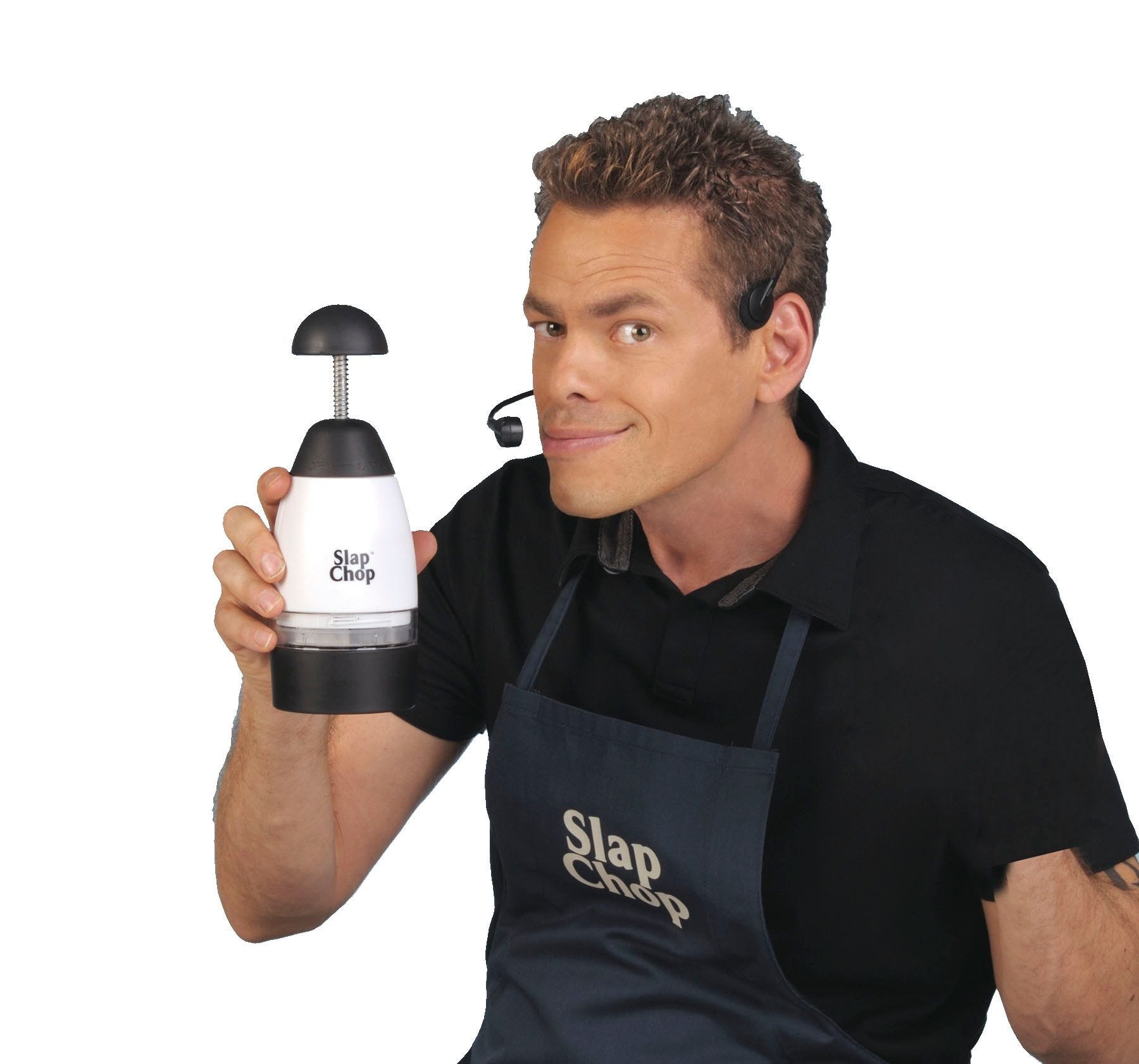
There’s a reason that people who like to cook like to cook. It’s the sense of control over every step of the process; the ownership over every decision that makes the resulting dish truly theirs. They want to learn to use a knife, instead of a slap-chop. They want to mince garlic instead of spooning it out of a jar full of seed-oils.
People who love investing, meanwhile, want to take pride in understanding where to put their money. They research companies or the histories of commodities or whatever else they do.
Guitarists love buying new pedals. Plant people like… new seeds… or fertilizers… or something. The point is that fetishizing over the minutia, building and adjusting new systems over and over, is how you learn. And while we do that all the time in cyberspace, most have been “spared” the work of doing this with the computer itself.
There is a reason that, when our “digital marketplaces” get compared to casinos, the game everyone thinks of is slot machines and not poker. Poker takes skill! You need to study probability just to get in the door, and then the game becomes psychology. There is no skill, relatively speaking, in pulling a lever for a ten second audio-visual dopamine kick.
We say a home chef is in touch with cooking, an active investor in touch with the market or the industry, and a poker player is in touch with odds and other players. They learned to be in touch by years of practice. Years.
If some gadget had come along which “spared” them the “bother” of making mistakes, clumsily handling their tools or cards, figuring out their own little tricks and optimizations, then where would they end up?
In the 1970s, micro-computers were devices to be assembled from a kit by people who had spent years building their own radios and other wacky devices from parts they picked up at Radio Shack. By the 1980s, they were devices to be programmed. By the ‘90s, they were complex, high-resolution worlds of configuration files, drivers, file-systems, memory-saving boot optimizations (config.sys and autoexec.bat, anyone?) applications with many, many drop-down menus and options, and thick-ass manuals. Remember when people had bookshelves full of manuals and reference books about computer programs?
You’d regularly create backups of important files, penciling labels onto floppy discs or scrawling with a sharpie onto burned CDs, becoming your own active archivist with scheduled duties and systems of organization.
Gamers had to learn networking fundamentals to hold LAN parties or host team chats.
If you were online, you had to avoid viruses and malware and learn some HTML.
You had little post-it notes covered in important settings and login credentials for everything stuck on the side of your case. You had important commands written down, or made little flow-charts full of steps for your less tech-savvy family and friends. Click here, type that, look for this.
God, all those steps! So many steps! So many little things, one after another! So many ways for things to go wrong, for things to break!
If only we could just have a magic box that does everything we want, but requires nothing of us to get what we want!
If only we could remove all those steps between the place we are, and the lofty places we want to climb become elevated to!
Poof. You got your wish. And now you whine about how “tech” is ruining everything.
Learning is Growth
When you learn something and master it, you grow and change. You surround the process, become larger than it, and control it. You are the cybernetic controller of something smaller than you, something you run circles around. You have power over it.
Here’s a thought experiment that might strike some as insensitive: if you and I lived in some backward barbarous place or time, we could own slaves. And they could do all our work for us! But—but—we’d need to invest a lot of time in evaluating their work and keeping them from either slacking off or rebelling or escaping. Even if we leave most of that work to some head-slave, we’d need to keep them in line just as much. We’d need power over them. Naturally, as ever-so-slightly more civilized and enlightened people than that, we just lubricate these relations with money and incentive structures.
Now. Your computer is your magical do-everything box. It is your servant. Your slave. Have you been a diligent owner? A master? Are you policing it?
Are you telling the tech companies what you want, and are they giving it to you with a “Yes Sir! Anything you say, sir! You pay me, and so I do everything you say, because you’ll ditch me and replace me if I don’t!” Are they? Is that what Zuckerberg and Bezos and Musk and Nadalla and Pichai and Cook are thinking?
They should be. They should be, but they don’t. You only hold property rights over your computer—they own it. They are its master, not you.
For what it’s worth, I know that there is a massive social movement in tech to abolish the master/slave dichotomy in speech, such as renaming all “master” git branches to “main”. If we still used IDE hard drives, we wouldn’t have “slave” jumpers (Oh man, remember when setting jumper pins was a normal computer activity?)

In this case, seeing just how close everyone is to being fucking enslaved by their helpless relation to their technology, I think the dichotomy is apt and poignant. Unavoidable. Necessary. Because it’s still a solvable problem—You bought the damn thing, and you can begin to free yourself with it any time you’d like. But motivating you to do that will require every provocation in my rhetorical repertory.
You need to make your computer your slave. You need to master it. You can. It’s simple… in the same way that diligently spending years putting in the work to master something is simply something everybody does at some point in their lives.
Just do that.
Oh, and you need to have started… let me check my watch… yesterday.
Teaching What’s Hard
I’d love to provide everyone with some sort of course or program to help interested parties reign in control over their digital lives the hard right way. I’ve spent years doing all the work I can to save extraneous steps, while saving all the pedagogical steps necessary for you to do yourself. I have figured out the precise demarcation between as simple as can be, but no simpler.
Everyone else is hocking some stupid gadget to solve the problems created by gadgets. Or some crash-course boot camp that ends with some certification of a technical skill. That’s not whats needed. You need climb the ranks after boot camp; your life of mastery needs to be boot-strapped!
Your agency begins with control over the environment of day-to-day life. Your bedroom, your kitchen, your household, your gym equipment, and, yes, everything you do on your computers.
If you want to help me develop this idea, let’s talk! In the meantime, I will continue to write, work part-time, and volunteer my time helping substance users learn about and modify their behaviour.
Next time, we’ll talk a bit more about cyborg feminism and how “mastering” your computer has been discussed in video game criticism. We will also touch more heavily on the lessening of madness which is this blog’s raison d’être.
Don’t miss it! Subscribe now!
We cannot have such an attitude towards computers as you desire unless interacting with computers becomes *strictly optional*, either as a hobby for eccentrics or a skill for professionals. Our society, of course, has been doing exactly the opposite, forcing computers into everything and thus *requiring* them to be dumbed down.
Great post! Need to reread this and mull on my next steps. Adding friction where it's important and subtracting it where I'm a master seems to be a difficult meta-skill to master!